Last updated November 20, 2026
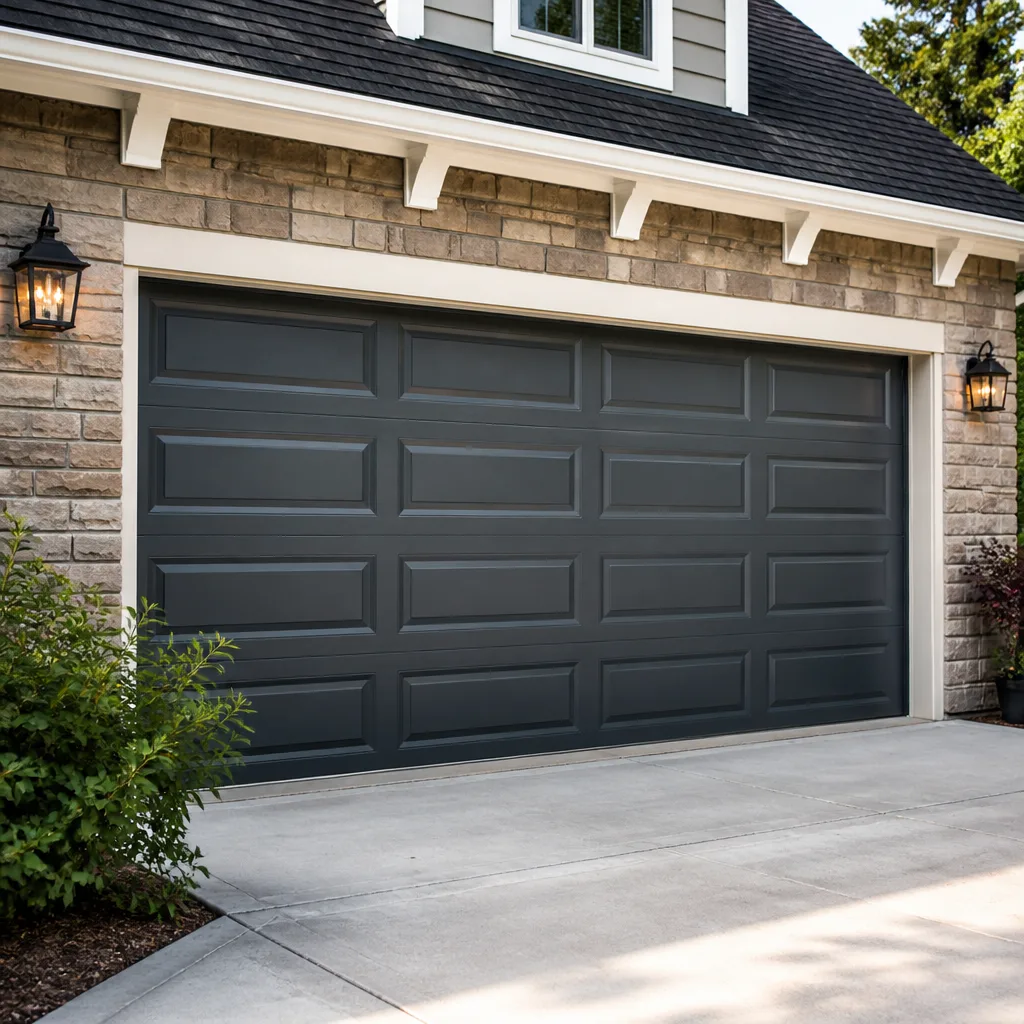 Raised-panel steel
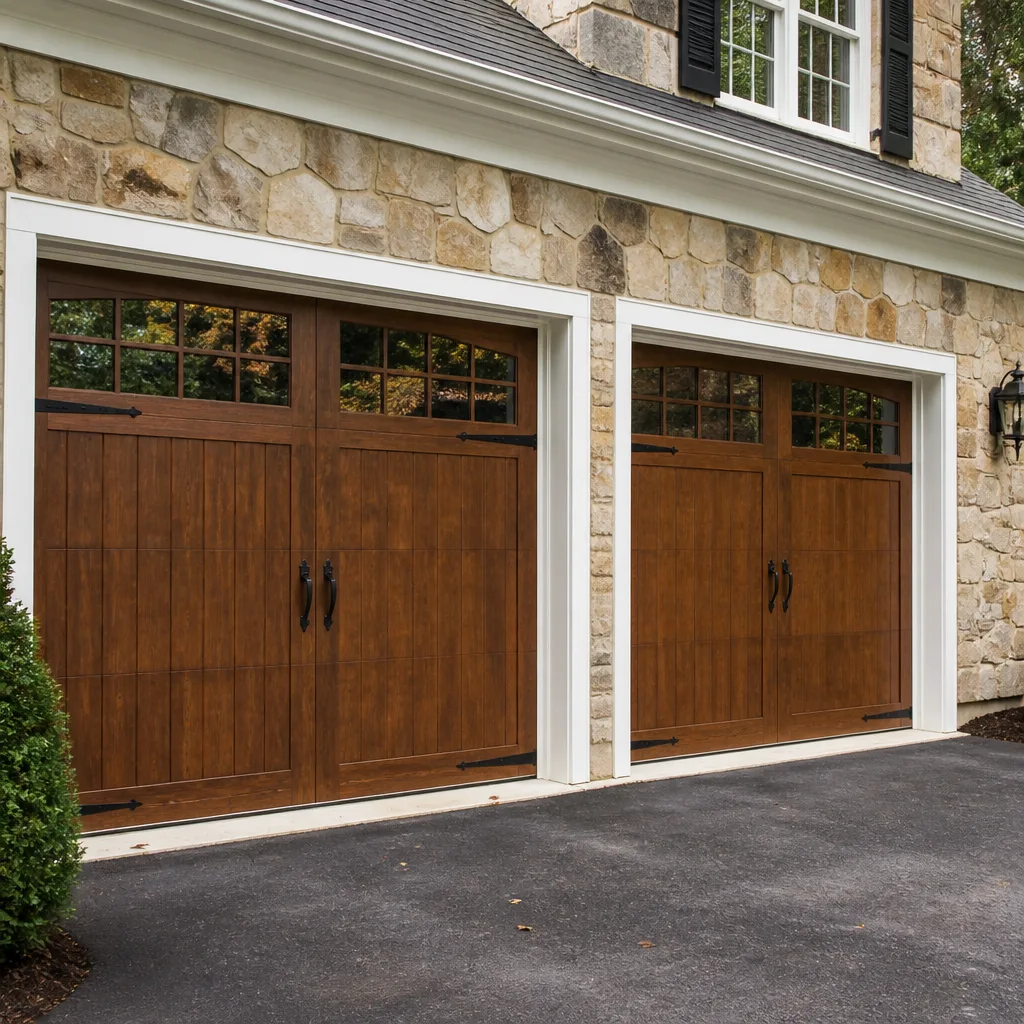 Carriage house
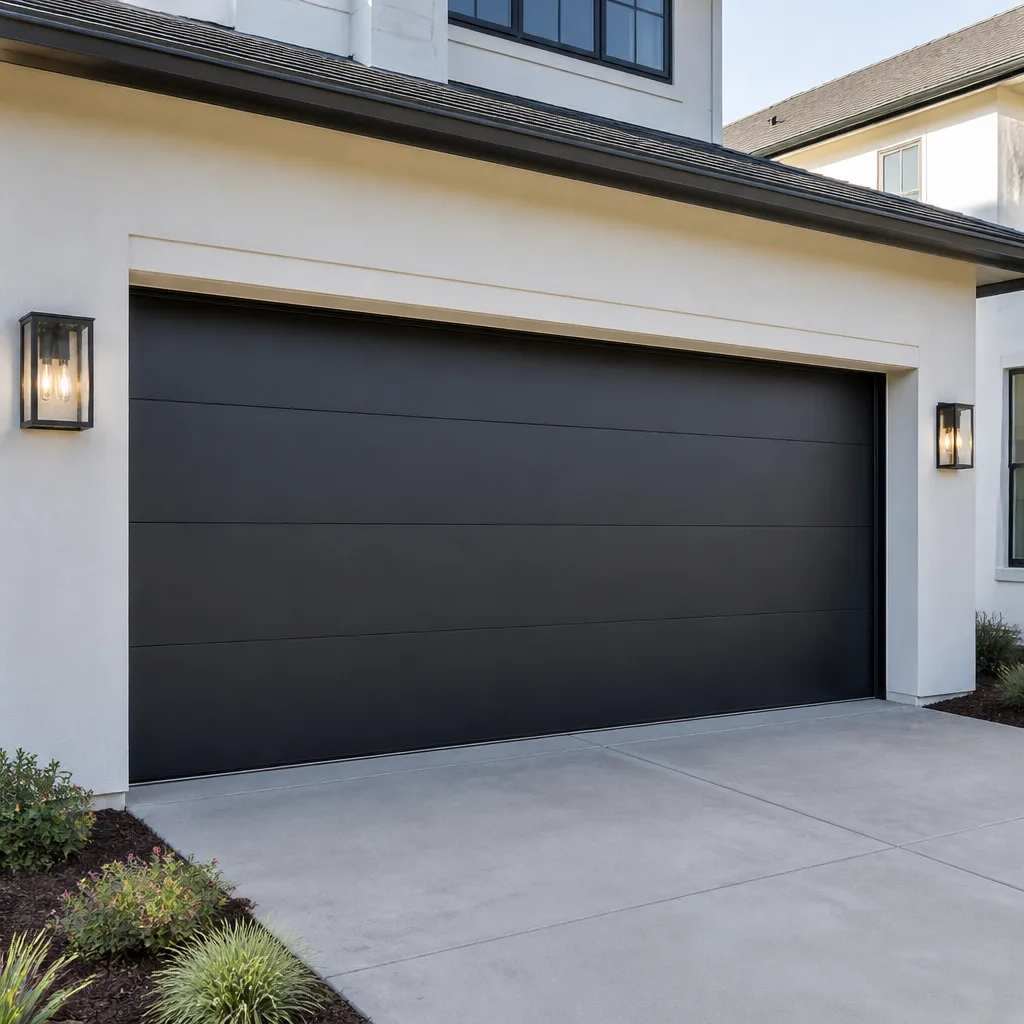 Modern flush
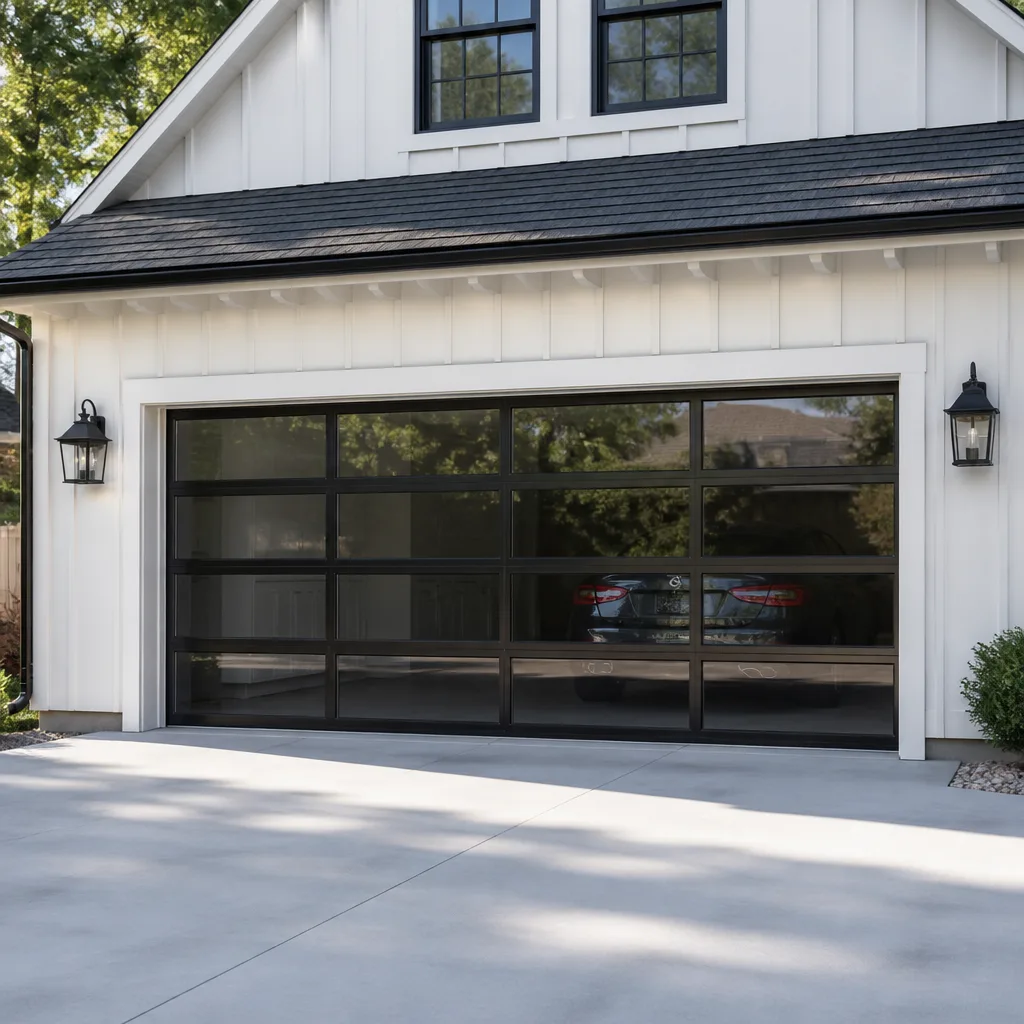 Full-view glass
 LiftMaster openers
 Chamberlain openers
Full 25-point door and opener safety check with every visit - springs, cables, rollers, tracks, and your LiftMaster or Chamberlain opener included
You get a price before we start. It does not change when the pro arrives.
Get your free estimateHow to Hire a Garage Door Contractor in Old Brooklyn: A Step-by-Step Guide
Most homeowners start the conversation with a price. That’s the wrong first move. A garage door is a heavy, spring-loaded machine, and two contractors can quote the same job for very different reasons, with very different results. The one question that separates a specialist from a guesser is simple: “What diagnostic steps do you take before quoting a repair?” Someone who can answer that in specifics has done the work before. Someone who can’t will often replace parts until the door cooperates, at your expense. This guide walks you through the questions, the red flags, the licensing checks, and the review-reading tricks that actually matter in Old Brooklyn. You’ll finish knowing exactly who should be standing in your driveway.
Quick Answer
To hire a garage door contractor in Old Brooklyn, ask brand-specific diagnostic questions before you book, verify how Ohio licensing works for this trade in about a minute, demand itemized parts-and-labor quotes, and read reviews for signs of real repair work rather than a tune-up dressed up as a rescue. The right contractor knows your opener’s platform by name and explains what they’d check before touching anything. The wrong one quotes a flat price over the phone and pushes you to decide today.
Styles & brands we work with
- Raised-panel steel
- Carriage house
- Modern flush
- Full-view glass
- LiftMaster openers
- Chamberlain openers
Table of Contents
- What Diagnostic Steps Should a Contractor Take Before Quoting a Repair?
- Five Brand-Specific Questions That Separate Specialists From Generalists
- What Ohio Contractor Licensing Actually Covers for Garage Door Work
- Red Flags in a Written Quote You Should Never Ignore
- How to Read Reviews for Garage Door Work Specifically
- Getting a Second Opinion Without Undoing the First Diagnosis
- Why Spring Work Deserves Its Own Category of Contractor
- Repair or Replace? How to Decide With a Clear Head
What Diagnostic Steps Should a Contractor Take Before Quoting a Repair?
A real garage door diagnosis is a sequence of checks, and a contractor should be able to name them in order. When you call about a door that won’t open or won’t close right, you can’t tell from the parking lot whether the problem sits in the spring, the opener’s logic board, a misaligned track, or a safety sensor that’s simply pointed at a shadow. Anyone quoting a repair without laying eyes on the door is selling a guess.
Ask the person on the phone what they’ll look at when they arrive. What you want to hear sounds something like this:
- Balance test with the door in manual mode, to see whether the springs are actually carrying the door’s weight.
- A visual and functional check of cables, drums, hinges, rollers, and track alignment.
- Opener force and travel limits, plus a check of the safety reverse sensors.
- A check of the logic board and, on smart openers, the wall control and app connection.
- A clear explanation of what failed, what didn’t, and which parts are involved before any number is quoted.
Notice that a price doesn’t appear until the last step. A repair under $200 on a door that’s simply out of balance is common, and so is a fully failed spring that needs replacing for several hundred. The only way to know which one you have is the check order above. Generalist handymen who do “a little of everything” often skip the balance test and reach straight for the opener’s force adjustments; that can make a door move without making it right.
This matters in Old Brooklyn more than you might expect. The neighborhood’s housing stock runs from pre-war brick apartments to postwar bungalows to newer townhomes, and each era of door and opener behaves differently. An opener from the 1990s has no safety reverse photo-eye of the kind newer units carry, and its limits are set with dials, not boards. A modern app-connected unit has a network that needs the phone to be talking to the same hub. A technician who’s seen both knows which questions to ask first.
Five Brand-Specific Questions That Separate Specialists From Generalists
You don’t need to know the answers to these questions. You need to hear whether the contractor does. When a technician works on a brand regularly, these come back in plain, confident language within seconds. When they don’t, you’ll hear a pause, a “we’ll figure it out,” or a pivot back to a price.
1. “Do you know the difference between a LiftMaster MyQ unit and an older logic-board opener?”
MyQ is a smart platform, and its diagnostics run through the app, the wall control, and the cloud connection. Older LiftMaster and similar logic-board units are diagnosed chip by chip with a multimeter. The two have different failure signatures. A technician who works both worlds can usually tell you on the phone whether your issue is mechanical or network-level before they arrive.
2. “How do you handle a Chamberlain opener that runs but won’t open the door?”
A motor that spins without lifting the door is one of the most common calls we hear about, and the answer almost always points to the gear and sprocket assembly or the travel limit setting, not the whole unit. A specialist will describe the parts by name. A generalist will describe replacing the whole opener.
3. “Have you worked on Clopay doors, and how do you handle their specific spring setups?”
Clopay builds a lot of the residential doors in this part of Ohio, and their spring systems vary by door model and weight. A contractor who services Clopay specifically will ask for the model plate before scheduling a spring job. That’s a good sign, not an inconvenience.
4. “What’s the difference in spring type between a torsion system and an extension system, and which does my door use?”
The right answer is: torsion springs mount above the door on a horizontal shaft and are wound tight; extension springs run along the horizontal tracks on either side and stretch. The technician should be able to look once and tell you which you have. If they can’t answer without seeing it, ask them to describe the visual difference; every specialist can.
5. “If the repair turns into a replacement, do you do the installation too?”
Replacing a single spring is one job. Replacing a fully failed door, or a hinge that’s torn through a rusted panel, is another. A contractor who can name the five core services (repair, opener repair, installation, emergency service, spring repair) will tell you upfront whether they handle the whole arc. If they don’t, you’ll be calling a second company mid-project.
Ask only one or two of these in the first call. The pattern reveals itself quickly. In our experience, a contractor who serves eight major brands comfortably (LiftMaster, Chamberlain, Genie, Clopay, Amarr, Wayne Dalton, Craftsman, and Raynor) will happily name three of them without prompting.
What Ohio Contractor Licensing Actually Covers for Garage Door Work
This is the section where most guides go vague, and it’s the one that matters most when something goes wrong. In Ohio, contractor licensing is handled in a way that catches many homeowners off guard: there is no single statewide license for garage door repair. The rules are set at the local level, and they vary by city and county.
Here’s what you can actually check in about 60 seconds:
- Ask the contractor which local or county registration they hold and get the number in writing on the estimate.
- Call your city’s building department and ask whether a permit or registration is needed for a residential garage door repair or installation at your address. They’ll tell you in a single call.
- Ask the contractor to confirm liability insurance and, where they employ technicians, workers’ compensation coverage. A legitimate operation will provide a certificate without hesitation.
- Confirm in writing whether the local professional is licensed as their state requires and who holds the registration for the job.
A contractor who can’t answer steps one and three in conversation is the one to slow down on. Insurance matters most in spring and cable work, because that’s where the injury risk sits; a technician reaching for a torsion spring without the right winding bars and training is a real hazard, not a theoretical one.
Old Brooklyn sits inside the city of Cleveland, and city rules on permits and inspections apply. For a standard residential spring or opener repair, most homeowners won’t need one, but the safest habit is a direct question to the city’s building department rather than a contractor’s reassurance. If the job involves structural changes to the opening, or a new door that’s a different size from the original, permits become relevant quickly.
If you’re a landlord managing a rental property in Old Brooklyn, put the registration and insurance confirmation on file with your other vendor paperwork. It’s a five-minute step that protects you when a tenant reports damage and the repair bill comes back to you.
Red Flags in a Written Quote You Should Never Ignore
A written quote is a diagnostic document as much as a price sheet. What’s written (and what’s missing) tells you more about the technician than the dollar figure does. If you’ve ever received a quote that says “repair garage door: $X” and nothing else, you’ve seen the first red flag up close.
Watch for these:
- Vague line items. A proper quote separates parts from labor and names the parts. “Spring replacement” is not the same line item as “2x torsion springs, 2x winding cones, labor.” The one that names the parts is the one you can hold someone to.
- Refusal to itemize. If a contractor won’t break down parts vs. labor when you ask, that’s a sign of either sloppy estimating or a price padded to cover unknowns. A specialist is usually glad to itemize because they’re confident about the diagnosis.
- Pressure to decide same-day. Urgency belongs on the job, not the sale. A door that won’t close safely is a legitimate emergency; a quote that “expires in two hours” is a sales tactic. The good contractors will honor the price tomorrow morning.
- One price for one spring and a matched pair. A spring is quoted singly. If you have a matched pair (most doors do), replacing both is standard, and the price should reflect roughly double the single-spring range. A quote that hides that is one you’ll get a surprise on at the invoice.
- “We’ll see once we open it up.” Some repairs genuinely reveal more on disassembly, but a technician should walk you through the possibilities and their price ranges before starting. Ask: what’s the range if the gear is fine and the limit is off, and what’s the range if the whole logic board is gone?
- No phone number or address on the paperwork. This one takes five seconds to check and saves headaches when a follow-up visit is needed.
One more: on installation and replacement quotes, beware a contractor who quotes a firm price without measuring your opening first. Spring and track weight depend on exact door measurement, and the honest answer is a free measure followed by a written price. When that replacement work is scheduled rather than same-day, that’s not a delay, it’s the correct process.
How to Read Reviews for Garage Door Work Specifically
Reviews are useful, but they’re noisy. A five-star review that says “great job, very nice guy” tells you almost nothing about whether the contractor could correctly diagnose your specific door. The reviews that actually matter to you name the problem and the outcome in specifics.
Here’s what to look for:
- Specific failure names. “Snapped torsion spring on a 16-foot door, replaced the pair, door was balanced” is a real repair review. “Fixed my garage door, highly recommend” is a tune-up review.
- Brand mentions. A review that says “our LiftMaster opener wouldn’t connect to MyQ and they traced it to the Wi-Fi bridge” tells you the contractor handles modern smart units. A review that says “our old Genie needed a new gear” tells you they handle legacy units. You want both in the mix.
- Named parts and honest pricing. Reviews that mention an itemized quote, a written price, and no surprise on the invoice are the most valuable ones you’ll find.
- Follow-up calls. If a review mentions the contractor came back to re-check the work, that’s a strong signal of a technician standing behind the repair.
- Emergency visits. Reviews that mention the door stuck open at night or stuck closed on a weekend morning are gold when you’re in that exact situation. They tell you the emergency side of the business is real and not a marketing page.
What to discount: reviews where the “repair” was a tune-up and the language is four paragraphs of praise for punctuality. Punctuality matters, but it doesn’t tell you whether the contractor knows your opener. Also discount an unusual concentration of reviews from a single week; a sudden spike is usually a marketing push, not a service run.
For our part, we notice that reviews mentioning a specific opener brand tend to come from older doors, and reviews mentioning an app tend to come from newer ones. Both are useful. The Old Brooklyn homeowner who finds reviews mentioning both is the one who’s found a specialist.
Getting a Second Opinion Without Undoing the First Diagnosis
Getting a second opinion is a reasonable thing to do, and it doesn’t have to be awkward. The trick is to treat the first technician’s diagnosis as a hypothesis, not a verdict. You’re asking the second person to confirm or challenge the diagnosis, not to undercut the person who did the work.
Here’s how to do it right:
- Get the first diagnosis in writing. Ask the first contractor to put the failed parts, their part numbers if applicable, and the proposed fix on the quote. A legitimate technician will do this without argument.
- Don’t let anyone undo work already done. If the first contractor replaced a spring or opener, the second opinion is about whether the door is balanced, whether the opener’s force limits are set correctly, and whether the current parts are the right ones. Nothing needs to be disassembled to answer those.
- Ask the second opinion to focus on the diagnosis, not the price. “Can you confirm whether this is a spring issue or an opener issue?” is a fair question. “Can you beat this price?” isn’t; you’ll get a sales pitch instead of a diagnosis.
- Get the second diagnosis in writing too. Compare what the two technicians say about parts, labor, and the failure mechanism. If they agree, you have confidence. If they disagree, ask each to explain the difference in plain terms before you choose.
- Don’t promise to hire the second opinion on the spot. It’s fine to say “I’m gathering a couple of quotes.” A good contractor respects that. A contractor who pressures you to book immediately is the one to walk away from.
In practice, the disagreement usually comes down to one of two things: whether the opener is the failed part or just the messenger, and whether a single spring can be replaced on its own. A careful second opinion will tell you plainly. And if the answer is that the first diagnosis was right, you’ve spent a phone call verifying it. That’s not a waste.
When you’re ready to compare repair options in Old Brooklyn, our garage door repair page covers the common failure modes we see in this part of the city.
Why Spring Work Deserves Its Own Category of Contractor
Spring replacement is a safety job, not a mechanical one. That distinction is the reason we recommend requiring separate qualifications when the estimate says “spring” on it. Torsion springs are wound to hundreds of pounds of tension. Cables are under the same load. If something lets go while a technician is under the door with the wrong tools or the wrong technique, the result is serious injury, not a broken door.
Here’s how to assess a contractor’s spring expertise:
- Ask what tools they use for winding torsion springs. The right answer involves specific winding bars, not a screwdriver or a pair of pliers.
- Ask whether they carry a backup set of springs or order them per door. Most doors need matched springs ordered to specification, and a contractor who knows that is the one who measures before quoting.
- Ask whether they test the door’s balance after installing new springs. Proper installation ends with a balance check, not just a working door.
- Ask how they handle a door that also has a damaged track or hinge from the spring failure. Spring failure often takes other parts with it, and the quote should reflect that from the start.
What you should not do, under any circumstances, is attempt to adjust, remove, or replace a torsion spring yourself. This is the one part of the garage door where a DIY approach can cause life-changing injury. Cables, drums, and torsion springs are all in the do-not-touch category. A trained technician working with the right tools and training is not being cautious; they’re doing the job the way it has to be done.
Old Brooklyn’s housing mix means spring work here spans the range. Postwar bungalows commonly run extension springs along the horizontal tracks. Newer builds typically use torsion systems above the door. Both fail, both need the door’s exact weight to order the replacement, and both are exactly the kind of job a generalist shouldn’t be guessing at. If your garage door opener repair call reveals a spring problem, you want the same technician to handle both, not a referral to someone else.
Repair or Replace? How to Decide With a Clear Head
The repair-or-replace question comes up on almost every call, and there’s no single right answer. What there is: a set of facts you should have in hand before deciding. A contractor who rushes to “replace” without walking you through these is the one to be suspicious of.
Ask the technician to answer these directly:
- What failed, and why? A snapped spring is a wear failure. A failed opener on a door that’s out of balance is a secondary failure. A bottom panel that’s bent from a misaligned track is a different issue again.
- What’s the age and condition of the door? A door with rusted panels, cracked sections, or sagging tracks is closer to replacement. A door with good panels and a single failed spring is a repair.
- What will the repair cost, and what will a replacement cost? Both should be quoted in writing. A contractor who only quotes one side of the equation is steering you.
- What’s the safety story on the current door? A door without a working safety reverse on the opener is a household safety issue, not just an inconvenience. Any replacement should include a properly functioning safety system.
In our experience, the doors most often worth replacing are the ones where a spring failure has taken a panel with it, or where the door is a style that’s now unavailable and the panels can’t be matched. The doors worth repairing are the majority: good panels, good tracks, one failed component. That’s a repair, not a replacement, and a specialist will usually tell you so.
If replacement is the right call, that’s a scheduled job, not a same-day one. Doors are measured, ordered to size, and installed when they arrive. The good news is you don’t need a second contractor to do the follow-up; our garage door installation service handles the whole arc from measurement through the final balance check.
For a broader look at what repair work in this city usually involves, the Garage Door Repair Old Brooklyn overview is the right starting point.
Common Mistakes to Avoid
- Leading with price instead of diagnosis. The cheapest quote is only meaningful if it’s for the right repair. Ask what they’ll check before asking what they’ll charge; the check order tells you who’s guessing and who isn’t.
- Accepting a flat price over the phone. A garage door diagnosis is a hands-on process. A firm quote on a repair without anyone looking at the door is a guess dressed up as a price. A range is fine; a firm number usually isn’t.
- Not checking registration and insurance. Ohio contractor licensing is local, not state-wide. Call your city’s building department and ask; it takes one call. Confirm insurance in writing before the technician climbs a ladder.
- Assigning a matched-pair price to a single spring. If a contractor quotes one number and later mentions “the pair,” ask which it is. A matched pair is roughly double the single-spring range, and the quote should say so from the start.
- Booking an installation as a same-day job. Replacement doors are measured and ordered. A contractor who promises same-day installation on a full replacement is one to be wary of. Installation is scheduled; repair is what can be same-day.
- Trusting a five-star review with no detail. Reviews for garage door work should name the failure, the parts, and ideally the brand. A review that says “great service” tells you the door opened at the end; it doesn’t tell you whether it’s balanced.
- Letting a second opinion disassemble existing work. A second opinion is about confirming the diagnosis, not undoing the first repair. Ask what can be checked without disassembly, and go from there. If a contractor wants to take things apart to prove a point, that’s a red flag.
See the difference
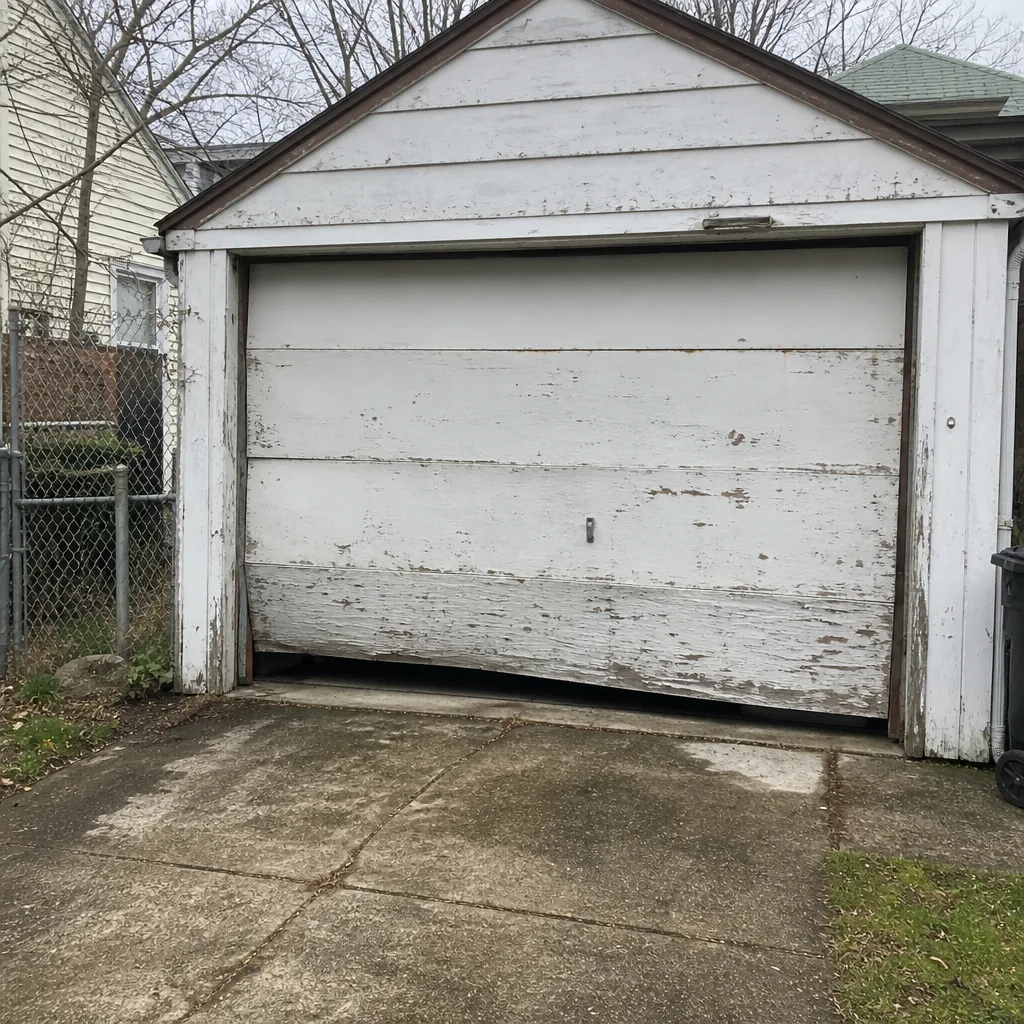 Before
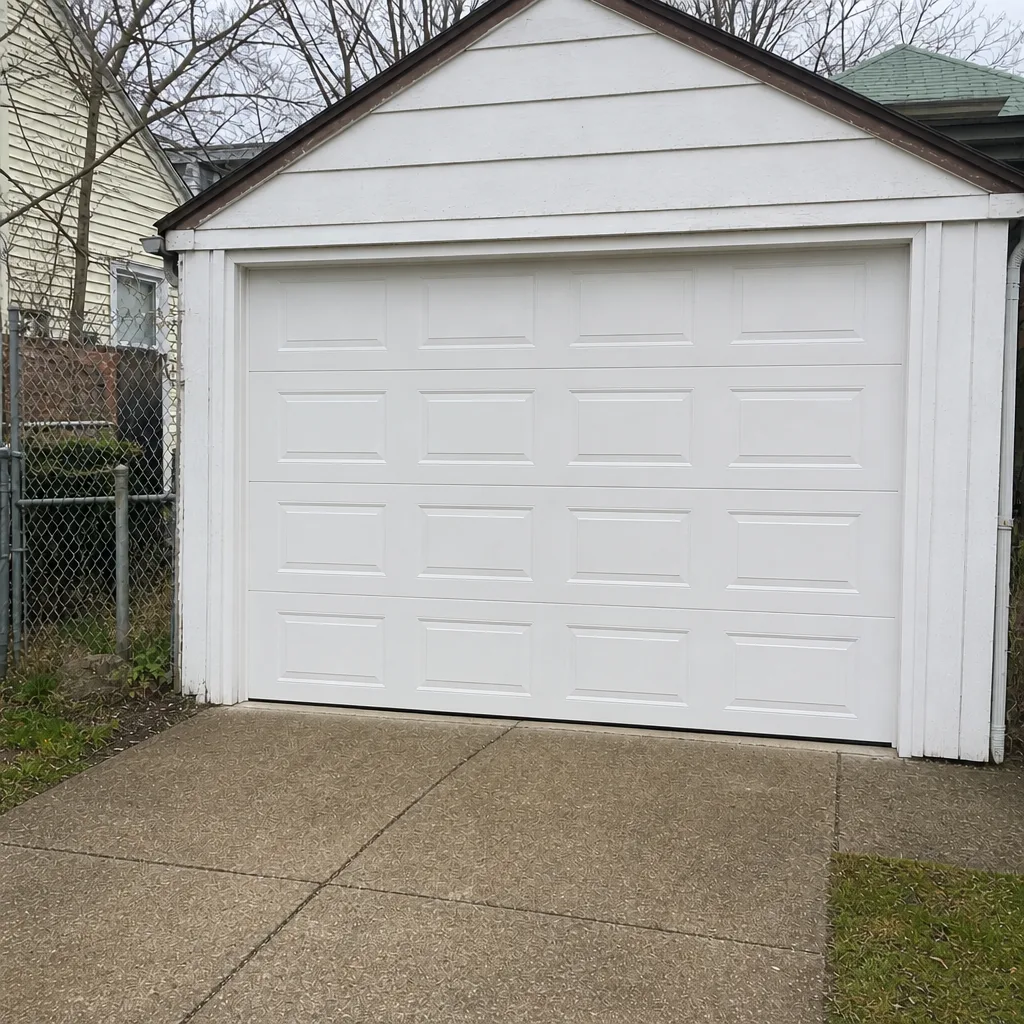 After
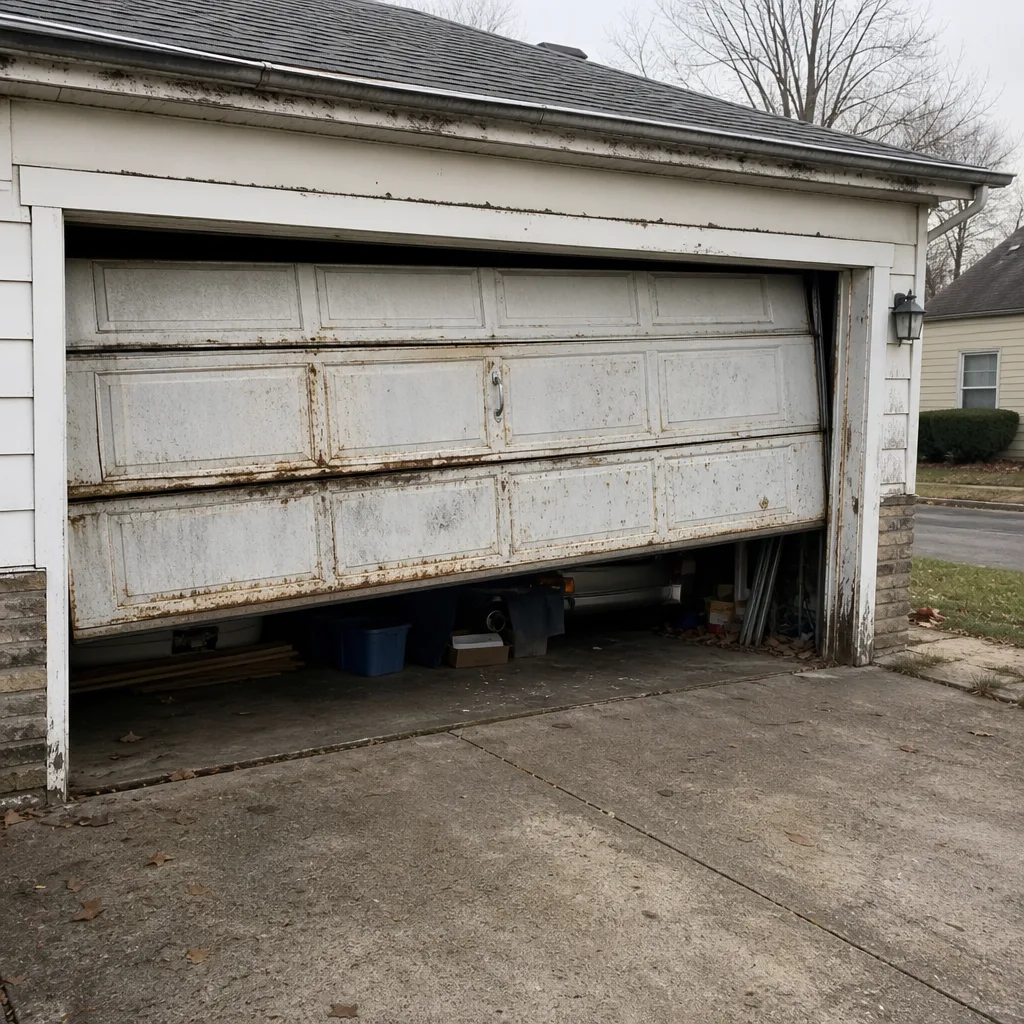 Before
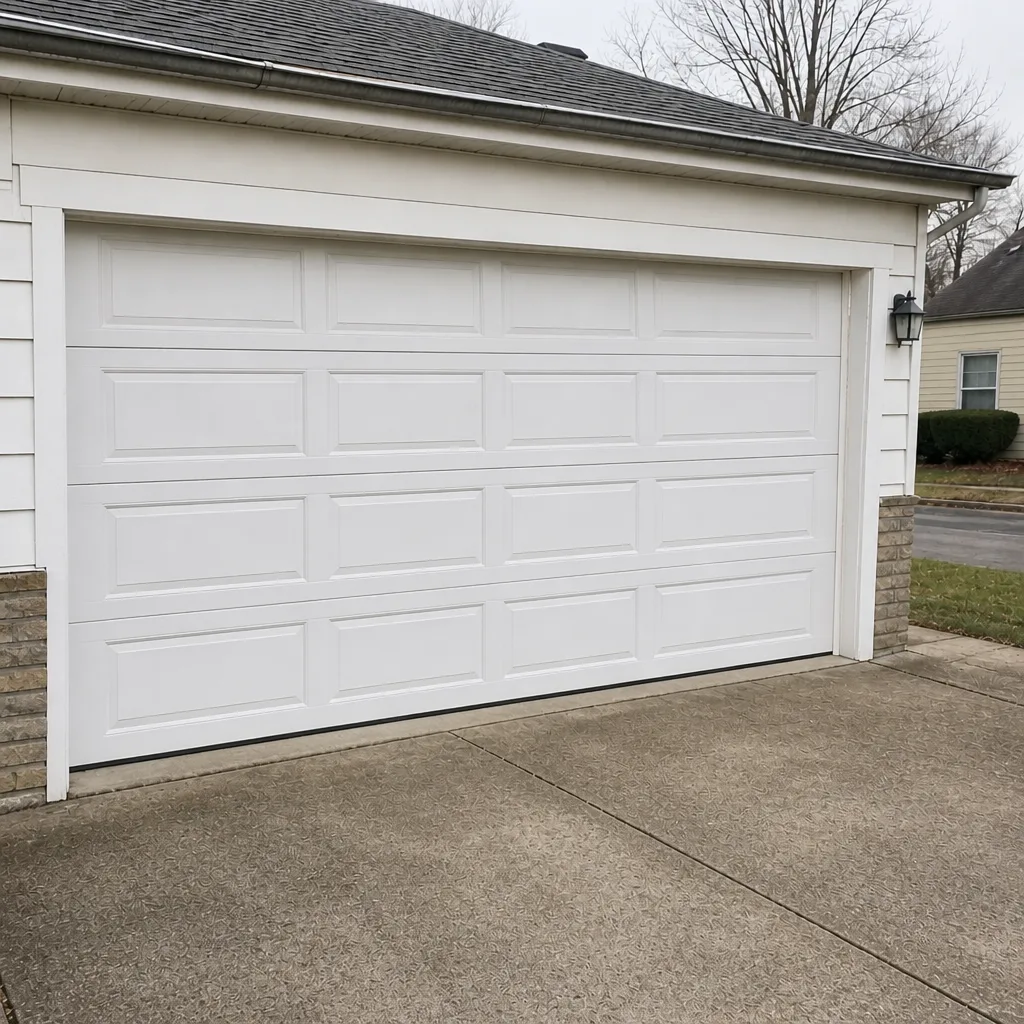 After
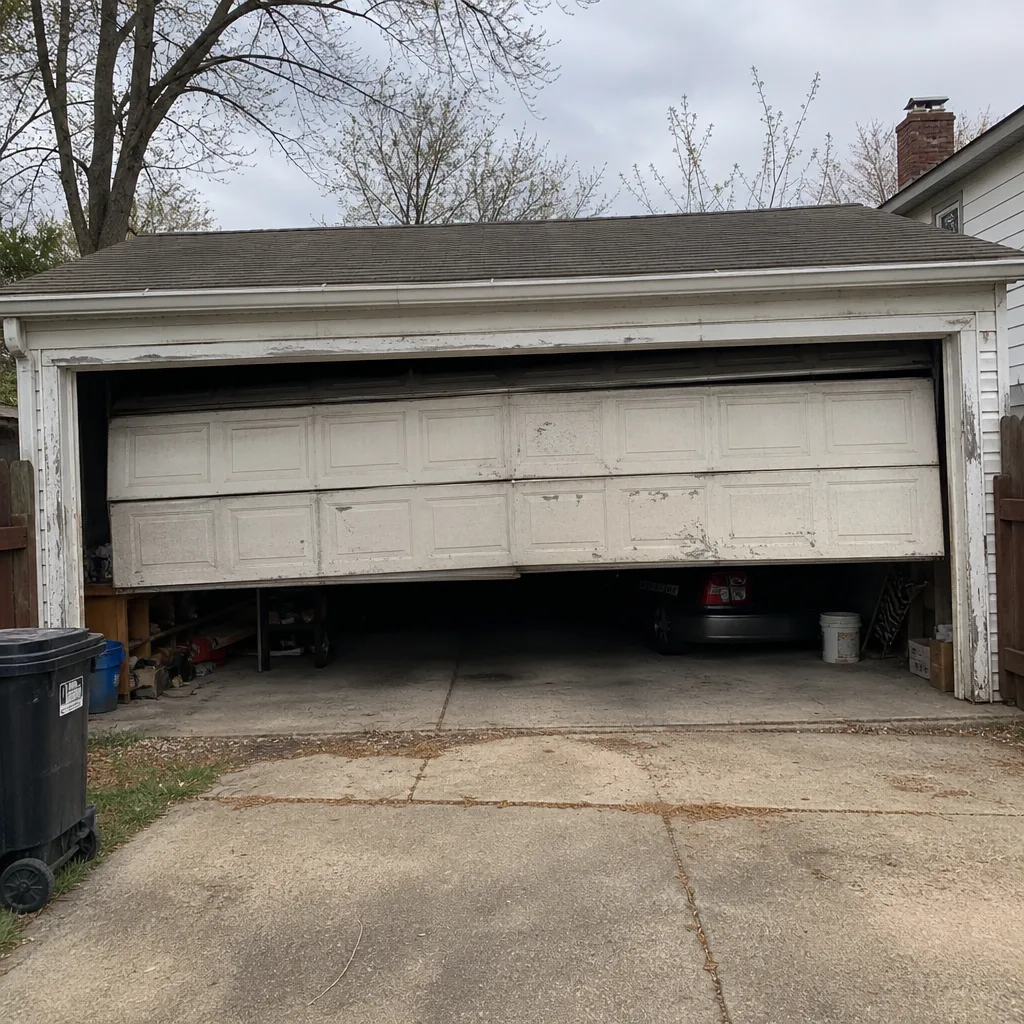 Before
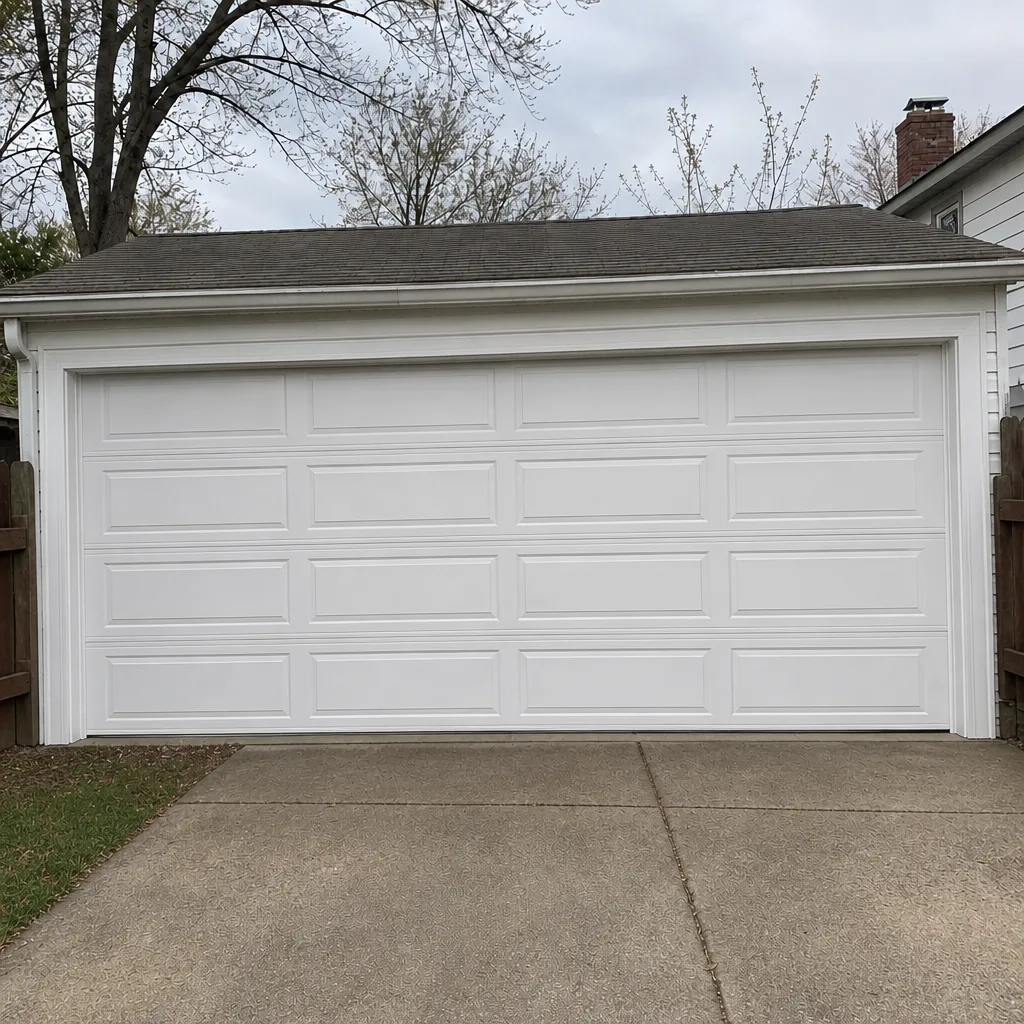 After
When to Call a Professional
Almost every garage door problem is a call-a-professional problem, but some are urgent. A spring that has snapped and left the door stuck closed is a security and safety issue, not a morning inconvenience. A door that’s stuck open, especially overnight, is the same in reverse. Cables that have come off their drums, doors that have come off their tracks, and any situation where the door’s weight is being carried by the opener alone all belong in the “call now” category. Ignoring them invites bigger damage to the door, the tracks, and the opener.
Less urgent but still worth a call: a door that opens and closes but feels heavy, an opener that reverses at random, a safety sensor that won’t align, a smart opener that’s dropped its Wi-Fi connection. These can wait for a scheduled visit. What shouldn’t wait is anything involving the springs, the cables, or the door’s physical position.
Garage Door Repair Old Brooklyn offers free estimates in Old Brooklyn and works on LiftMaster, Chamberlain, Genie, Clopay, Amarr, Wayne Dalton, Craftsman, and Raynor systems specifically. If your door is stuck or unsafe, call us at (888) 965-4156.
Frequently Asked Questions
A typical repair in Old Brooklyn usually runs a few hundred dollars, with a single spring replacement on the lower end and an opener logic board replacement or multi-part repair further up. The exact range depends on the part that failed and the door’s size. A written quote before the work starts sets the final price, and a good contractor will give you both the range and the itemized parts list up front. Call (888) 965-4156 for an exact quote; estimates are free.
Yes, for urgent situations like a door stuck open, stuck closed, or one that poses a security or safety risk. Same-day and emergency service are a core part of what we do, and spring failures and doors off their tracks are the calls we take most seriously. A repair visit can usually be arranged same-day; a full installation is measured and scheduled. Call (888) 965-4156 and describe the situation; you’ll get an honest answer about timing.
No. The written quote is the price, and any change gets your approval before work continues. If a technician opens the opener and finds a different failure than the one suspected, they should stop, explain what changed, and re-quote before touching anything else. A quote that shifts after the fact without that conversation is a red flag in any city, including Old Brooklyn. Call (888) 965-4156 to book a visit and get a written estimate.
The local pro who does the work is licensed and insured as their state requires, and we can confirm registration and insurance in writing before the job. Ohio doesn’t issue a single statewide license for garage door repair, so the registration is local. Ask any contractor you’re considering for the documentation up front; the answer should be straightforward and written. Call (888) 965-4156 for a free estimate from a vetted local professional.
Yes. We work on LiftMaster, Chamberlain, Genie, Clopay, Amarr, Wayne Dalton, Craftsman, and Raynor systems specifically, which means the technician already knows the failure patterns of those brands. Chamberlain and LiftMaster MyQ units, in particular, get diagnosed through the wall control, the app, and the opener’s logic board rather than a general “replace the opener.” If your opener is a brand outside that list, ask when you call; we’ll tell you whether it’s a fit. Call (888) 965-4156 to schedule a free estimate.
Yes. Our five core services cover repair, opener repair, installation, emergency service, and spring repair, so a job that starts as a repair and turns into a replacement stays with the same company. Installation work is measured and scheduled rather than same-day, but the pipeline from diagnosis to a new door is single-source. If you’re in Old Brooklyn and weighing repair against replacement, call (888) 965-4156 for a free written estimate on both.
The Bottom Line
Hiring a garage door contractor in Old Brooklyn comes down to a handful of specific checks. Ask what diagnostic steps they take before quoting. Listen for brand specificity on your opener and door, because a technician who names the failure pattern for a LiftMaster MyQ or a Clopay spring job has seen it before. Verify local registration and insurance in writing, then read the quote for itemized parts and labor. Treat spring work as a different category from the rest. And when something feels off, a second opinion is a reasonable phone call, not a betrayal.
Our technicians have up to 12 years of experience with these systems. From repair to full installation, one call covers the job. Call (888) 965-4156 for a free estimate in Old Brooklyn.
Written by the team at Garage Door Repair Old Brooklyn.