Last updated November 20, 2026
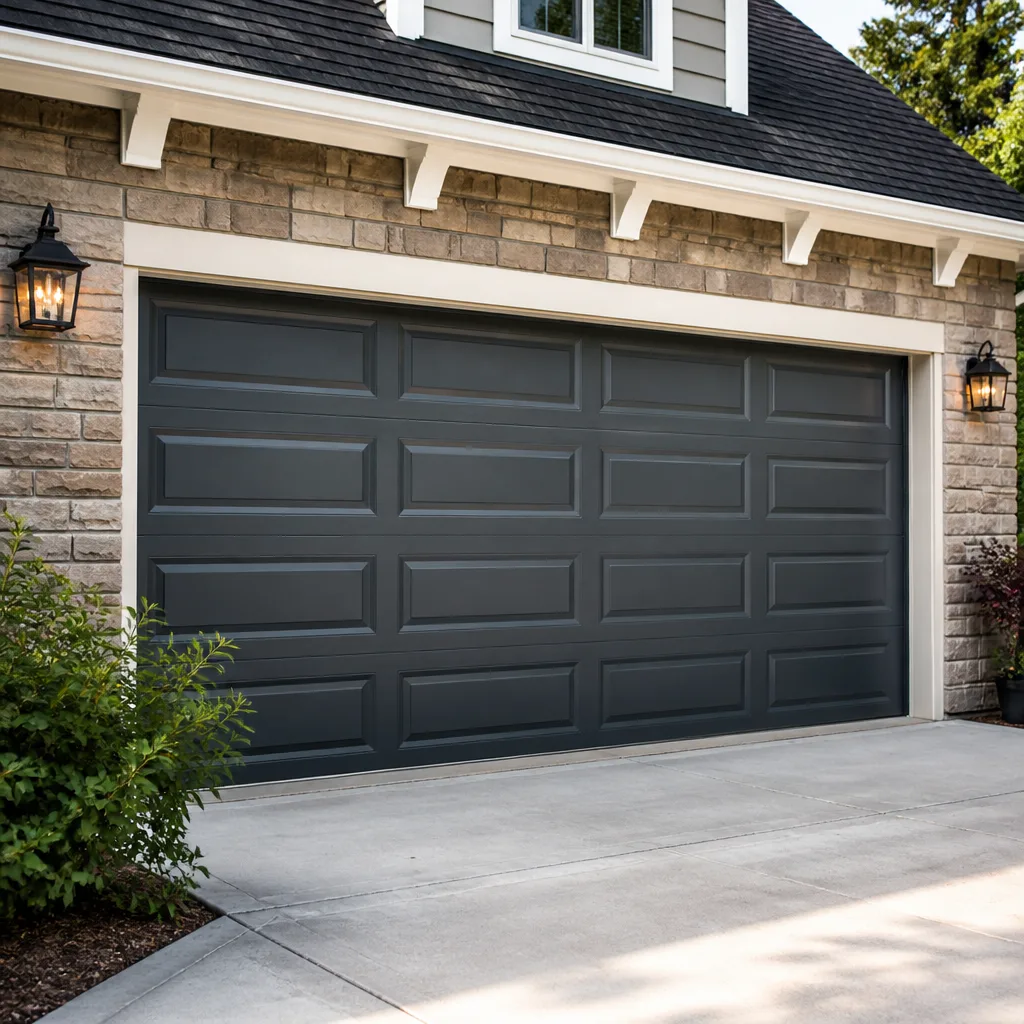 Raised-panel steel
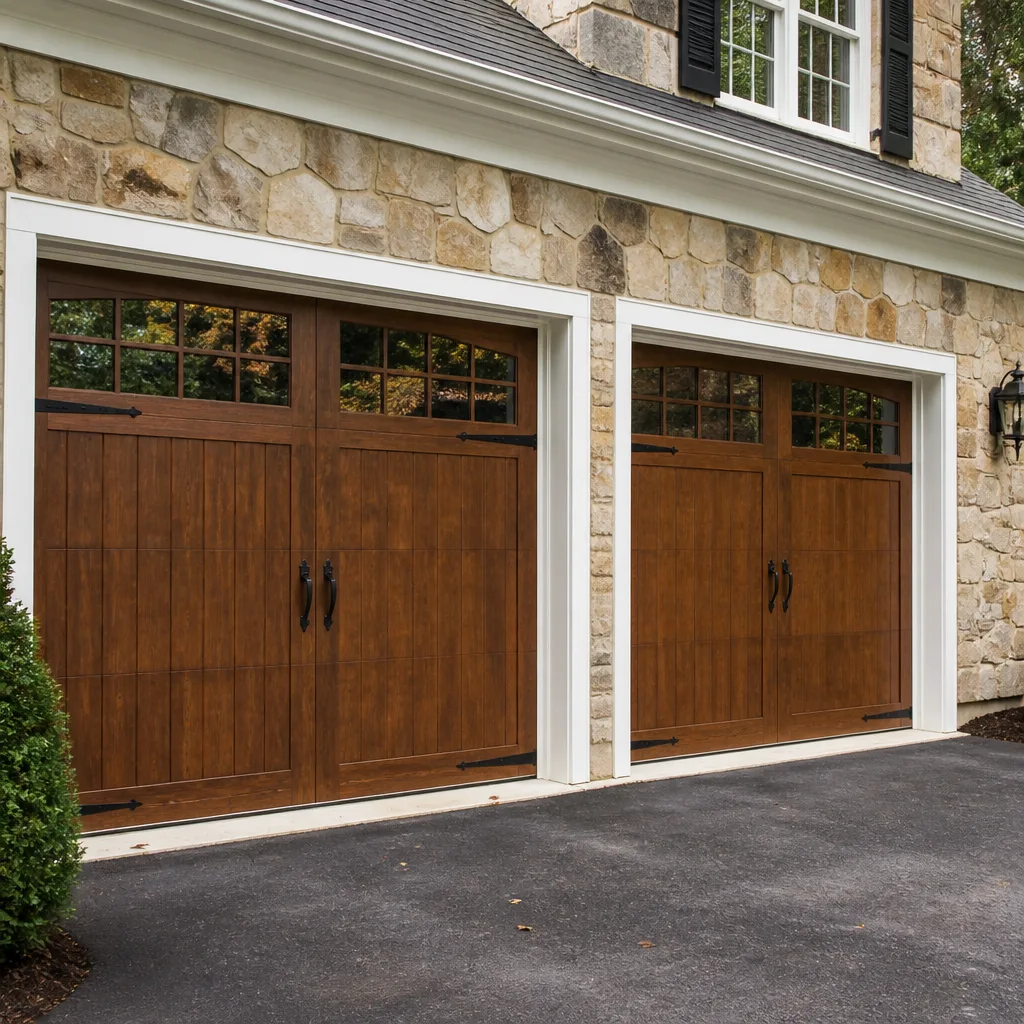 Carriage house
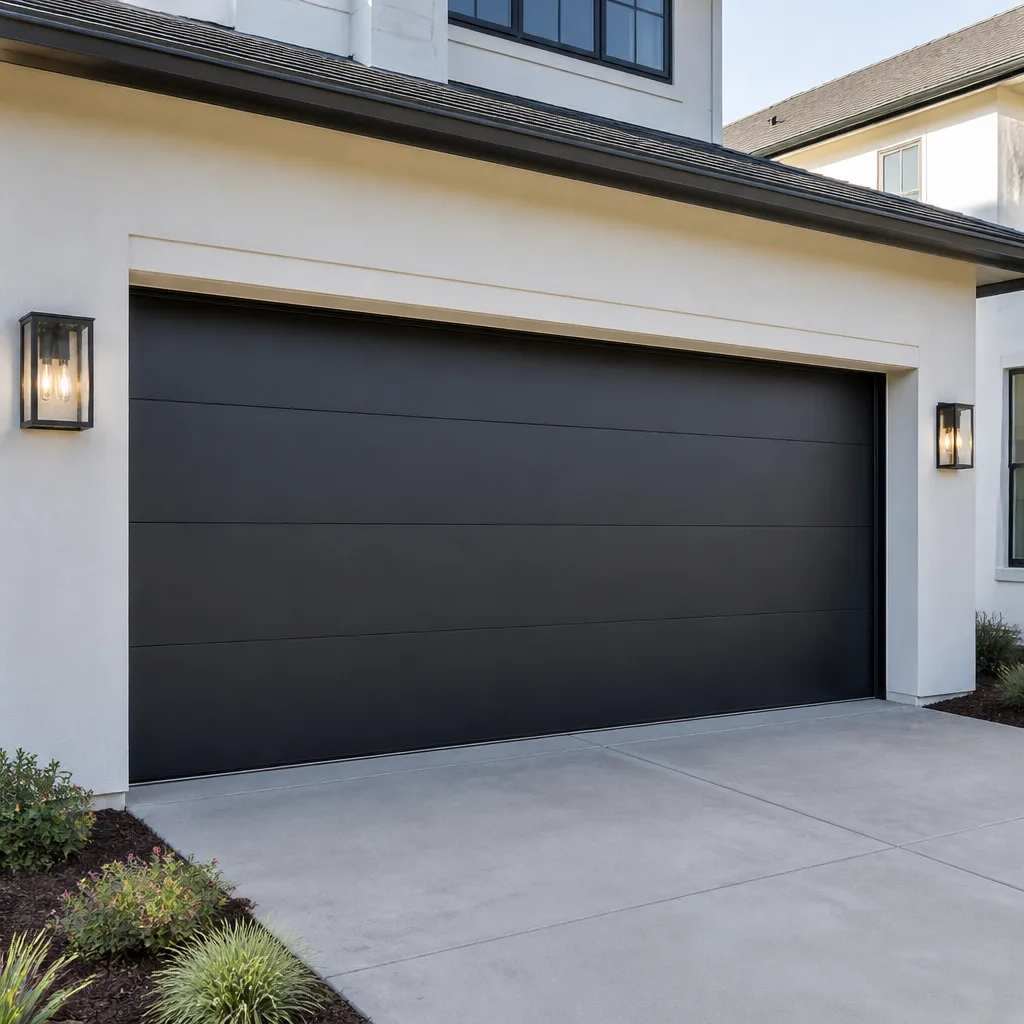 Modern flush
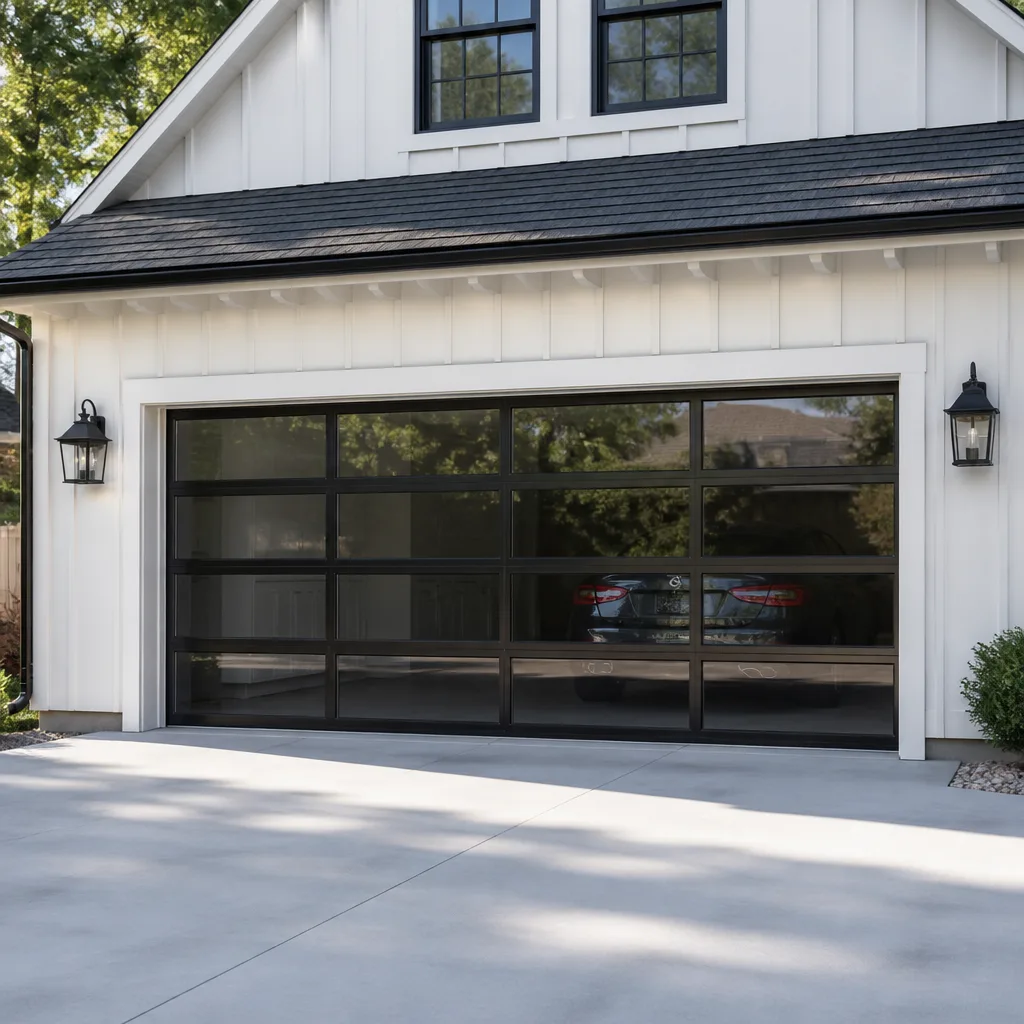 Full-view glass
 LiftMaster openers
 Chamberlain openers
Full 25-point door and opener safety check with every visit - springs, cables, rollers, tracks, and your LiftMaster or Chamberlain opener included
You get a price before we start. It does not change when the pro arrives.
Get your free estimateGarage Door Warning Signs: An Old Brooklyn Homeowner’s Reference Guide
A garage door that “just feels slow” and a door that “reverses for no reason” sound like the kind of vague complaint you’d mumble to a repair tech over the phone. But each one points to a specific, diagnosable problem, and knowing which one you’re describing means you can’t be talked into replacing the wrong part. Most homeowners in Old Brooklyn deal with this once every few years, usually in a hurry, usually when the car’s already in the driveway. This guide decodes the symptoms – the sounds, the movement patterns, the lag in the remote – into likely causes so you can walk into a repair with a clear picture of what’s actually wrong.
Quick Answer
Garage door warning signs fall into four categories: sounds (grinding, popping, squealing, banging), movement patterns (uneven lifting, shuddering, partial stops), opener behavior (delayed response, lights-only activation, remote vs. wall-button differences), and visual evidence (frayed cables, rust streaks on springs, bent track). The first two usually point to a mechanical component; the last two often separate a scheduled repair from a door you should stop using today. If a cable is frayed or a spring is visibly broken, stop operating the door and call a professional.
Styles & brands we work with
- Raised-panel steel
- Carriage house
- Modern flush
- Full-view glass
- LiftMaster openers
- Chamberlain openers
Table of Contents
- The Sound Diagnostic Index: What Grinding, Popping, Squealing, and Banging Mean
- Movement Pattern Warnings: Uneven Lifting, Shuddering, and Partial-Open Stops
- Opener Behavior Signals: When the Button Does Something Unexpected
- Visual Signs You Might Rationalize Away (And Their Failure Timelines)
- How Old Brooklyn Weather Accelerates Wear
- Stop Using the Door Today vs. Schedule a Repair This Week
- How to Describe the Problem So You Don’t Get Oversold
- Brand-Specific Quirks in Genie, Clopay, Amarr, and Wayne Dalton Systems
The Sound Diagnostic Index: What Grinding, Popping, Squealing, and Banging Mean
Sound is the most reliable early warning a garage door gives you. The door is a heavy moving assembly under constant tension, and any change in its normal hum is worth paying attention to. But different sounds point to very different parts, and knowing which is which tells you roughly what you’re looking at before anyone opens a toolbox.
- Grinding: Metal-on-metal contact. Usually a roller that’s seized or worn flat, or a track that’s bent enough to rub the roller. Left alone, a grinding roller will wear the track itself, and track replacement costs more than roller replacement. This is a scheduled-repair sound, not an emergency.
- Popping: A single sharp pop that repeats at the same point in the door’s travel usually means a torsion spring is winding unevenly or a cable has jumped its drum. A pop that happens once and stops is often a roller jumping a track joint. Popping springs deserve an inspection soon – don’t wait for a full break.
- Squealing: Almost always friction in the rollers or hinges. Runners that have lost their bearings or dry hinges missing lubrication will squeal through the whole cycle. This is the cheapest type of warning sign to address, and the easiest to ignore until it becomes grinding.
- Banging: The door slams at the bottom of the travel, or a hinge bangs against the track. A hard bang on close usually means the opener’s close-limit or force settings are off, or a hinge has lost a bolt. Banging is a safety concern because it stresses the whole assembly on every cycle.
In Old Brooklyn, where a lot of the housing stock has garages that were retrofit onto older lots, we’ve noticed that track alignment issues show up more often than in newer construction. Those tend to present as a rhythmic grinding rather than a continuous one, because the door only rubs at a specific section of the track. If your grinding comes and goes at the same spot, suspect the track before the roller. For a sound that’s clearly from the opener housing rather than the door itself, that points to a different set of causes – worth a dedicated look from garage door opener repair specialist.
Movement Pattern Warnings: Uneven Lifting, Shuddering, and Partial-Open Stops
Movement patterns are how the door tells you the balance is off. A garage door is designed to be nearly weightless in your hand – the springs are supposed to counterbalance the door’s weight so the opener only has to guide it, not lift it. When the door starts moving wrong, one of the counterbalance components has changed behavior.
- Uneven lifting (one side higher than the other): Almost always an unbalanced spring pair or a cable that’s stretched on one side. Torsion systems use one shaft with springs on both sides; extension systems use two springs. If one has weakened, the door tilts. This is a scheduled repair, but don’t let it run long – an uneven door puts extra stress on the track and the opener’s rail.
- Shuddering on descent: The door shakes or vibrates as it comes down. Usually a bent track, a worn bottom bracket, or rollers that have lost their shape. Shuddering can also mean the opener’s travel limit is pushing the door slightly past the floor, which makes the panels flex. Either way, it’s a sign to get eyes on it.
- Stopping partway up: The door starts up, stalls, and either reverses or just sits there. That’s usually the opener sensing resistance from a binding track, a failing spring, or a safety sensor being triggered. If it happens consistently at the same height, it’s mechanical. If it’s random, suspect a sensor or a logic board.
- Slamming at the bottom: The opener’s close limit is set too far down, or the force setting is too high. This can crush a sensor and wear out the bottom seal fast. Easy fix, but it should be fixed promptly.
One thing we always tell Old Brooklyn homeowners: a door that “feels heavy” when you lift it by hand (with the opener disconnected) is unbalanced, even if it moves smoothly. That’s the leading indicator of a spring on its way out. If the door is hard to lift, get it looked at before the spring breaks at an inconvenient moment. Springs under tension don’t fail gradually – they go suddenly, and the door becomes dangerous to operate until repair.
Opener Behavior Signals: When the Button Does Something Unexpected
The opener is the part of the system you actually interact with, which makes it the best diagnostic tool you own. The way the button on the wall, the remote in the car, and the unit’s own lights and clicks respond to your command tells you a lot about where the fault is. Genie and LiftMaster units in particular have well-documented behavior patterns for common failures.
Delayed response
You press the button, and nothing happens for two or three seconds, then the door moves. This is usually one of three things: a remote battery running low, a logic board that’s starting to fail, or interference on the radio frequency the opener uses. Swap the battery first, then move the remote closer to the unit. If it still lags at close range, the board is likely the issue.
Lights only, no movement
The opener’s light comes on when you press the button, but the door doesn’t move. That’s the unit telling you it sees the command but is refusing to act. Common causes: a safety sensor is misaligned or blocked (the photo-eye on the wall), a lock or vacation mode is engaged, or the motor has overheated from too many cycles in a short period. Walk to the wall button and try it – if the wall button works but the remote doesn’t, that narrows it further.
Wall button vs. remote discrepancies
This is the single most useful diagnostic in the whole guide. If the wall button works and the remote doesn’t, the problem is in the remote, its battery, or the radio receiver on the board. If the remote works and the wall button doesn’t, the wall button or its wiring is the fault. If neither works but the light comes on, the problem is mechanical or sensor-related, not the opener. Describe which button fails when you call, and a good technician can often diagnose over the phone before showing up.
Smart-home openers like LiftMaster’s myQ and newer Chamberlain units add a fourth data point: the app. If the app reports the door’s status and shows it stuck at a position, that confirms a mechanical bind rather than a radio issue. Older Craftsman and Genie units don’t have that layer of feedback, so the wall/remote pattern is your main clue. If your system is one of the app-connected ones, mention the brand to the technician so they arrive knowing the platform.
Visual Signs You Might Rationalize Away (And Their Failure Timelines)
Some warnings are obvious – a broken spring shows a visible gap in the coil. Others are subtle enough that most people walk right past them for months. These are the ones that turn a small scheduled repair into an emergency call.
- Hairline cable fraying: Look at the steel cables that run alongside the springs. A healthy cable is smooth and continuous. A cable showing individual strands starting to separate at the drum is on its way out. Cables typically fail within weeks of showing visible fraying, sometimes sooner. This is a stop-using-the-door sign.
- Rust streaks on springs: Rust on the coil isn’t automatically failure, but a steady rust streak running down the spring or on the floor under it usually means the spring is losing tension or the lubricant has dried out. Springs in this condition can fail anywhere from a few weeks to a few months out – worth an inspection, not necessarily an emergency.
- Bent track sections: A visible bend in the vertical track or the curved transition at the top is a movement problem waiting to happen. Left alone, rollers get knocked out and the door can jump the track. Get it straightened or replaced before the door comes off its rails.
- Worn rollers (visible flat spots): Nylon rollers develop flat spots over time, and steel rollers wear into an oval shape. Both cause grinding and rattling. This is a scheduled replacement, low urgency, but the cheapest time to fix it is before it wears the track.
- Loose bolts and hinges: Run your hand along the hinges and bolts once a season. Anything that wiggles by hand should be snugged up. Loose hardware is a leading cause of the “banging” sound and can eventually strip the bolt hole in the panel.
In our experience, the frayed-cable-and-rusty-spring combination is the one most often ignored. Both are visible from the floor. Both give you weeks of warning. And both, when they fail, leave the door stuck open or stuck closed at whatever time of day they decide to go. A door stuck open on a cold Old Brooklyn evening is a security issue as much as a mechanical one.
How Old Brooklyn Weather Accelerates Wear
Old Brooklyn sits in one of those climates that’s genuinely hard on garage doors. Cold winters, real freeze-thaw cycles in late winter and early spring, and hot humid summers that work the metal and the wood. This isn’t a matter of “harsh New England weather” or “desert dryness” – it’s a Midwestern lake-effect-adjacent climate, and the wear patterns are specific.
Freeze-thaw is the biggest factor. Water works into the bottom seal and the low track, then freezes overnight and expands. Over a winter that can lift a track a fraction of an inch out of alignment, which shows up in the spring as a grinding noise or a door that’s starting to rub on one side. Cold also stiffens the spring lubricant and the opener’s drive screw, which is why older doors run louder in January than they do in June.
Summer works the other direction. Humidity swells wood panels (many older Old Brooklyn garages still have wood-frame doors) and pops the nails loose over time. Heat causes metal panels to expand and contract, which works the hinges and roller brackets. A door that sounds fine in October often starts to squeal in July before settling down again. That seasonal noise pattern is normal – but any noise that appears suddenly and stays is worth a look.
The spring itself is affected by both extremes. Cold stiffens the coil, and a spring already near the end of its life is more likely to fail in a cold snap. That’s also why broken springs tend to cluster in cold weather – it’s not superstition. If your door has any of the spring warning signs in the fall, get it looked at before the first hard freeze.
Stop Using the Door Today vs. Schedule a Repair This Week
Not every warning sign is an emergency. Some are “get it on the calendar this month.” Others are “don’t touch that door again until someone qualified has looked at it.” Knowing which is which is the difference between a routine repair and a dangerous situation. Here’s how we sort them.
Stop using the door today (call for emergency service)
- A torsion or extension spring is visibly broken (gap in the coil, door very heavy to lift by hand)
- A cable is frayed, kinked, or has jumped the drum
- The door has come off one track or is hanging crooked at a noticeable angle
- The door won’t stay up when you lift it (opener disconnected)
- You hear a loud bang from the spring area followed by the door not opening
These are all situations where operating the door again could cause injury or further damage. Springs and cables are high-tension components – a broken one can send the door crashing down or leave it in a position where a panel could fall. Don’t try to “just close it once” to get the car in. Disengage the opener and leave the door alone. We treat these as emergency calls because a door stuck open overnight is a real security risk, and a door stuck closed with a car behind it can throw off the whole day.
Schedule a repair this week or this month
- Grinding or squealing that comes and goes (worn roller or track rub)
- Door runs unevenly by an inch or two
- Opener remote requires multiple presses or responds slowly
- Door shudders on descent but completes the cycle
- Visible rust streak on a spring but no break
- Opener light stays on or flashes a diagnostic code
These are all worth getting fixed, and none require you to stop using the door today. But the key word is “schedule.” A worn roller becomes a worn track. A slow remote becomes a dead opener board. Rust on a spring becomes a snap. The scheduled repair is almost always less involved than the emergency one.
How to Describe the Problem So You Don’t Get Oversold
The single best defense against being sold a replacement you don’t need is a clean description of the symptom. When you call, the technician is building a mental model of the door from what you tell them. Vague descriptions (“it doesn’t work right”) force them into guesswork, and guesswork on a service call sometimes means recommending the most thorough solution rather than the smallest one that fits.
- Name the sound and where it comes from. “Grinding from the left track near the ground” is ten times more useful than “it’s making a noise.” Point at it when it happens, then note where you pointed.
- Describe the motion. Does the door go up evenly, or is one side higher? Does it stall at a specific height? Does it shudder on the way down but not up? The more specific, the better.
- Test all three controls. Try the wall button, the remote, and (if you have one) the app. Tell the technician which ones work and which ones don’t. That alone can save a diagnostic visit.
- Note the brand and model. If your opener is a Genie, say so. If the door is a Clopay panel, mention it. Brand-specific knowledge matters – a technician who knows the brand knows the common failure pattern before they knock on your door.
- Mention the age roughly, not the exact install date. “It’s the original door from when we bought the house” is enough. Exact dates aren’t needed, but “old” versus “new” changes what we’d suspect.
- Say what you’ve already tried. Replacing the remote battery, realigning the sensors, resetting the opener – mention what you’ve done so nobody wastes time re-checking it.
What you should not do is accept a recommendation you don’t understand. If a technician says you need a new opener, ask why. If they say the door needs replacing, ask what’s wrong with the current one. A good technician will explain, because the diagnosis is the value – not the upsell. Same goes for springs: replacement of one spring when the pair is mismatched is normal, and asking whether the pair should be replaced together is a fair question. It’s the honest answer, not the maximum one.
If you want the most thorough version of this conversation, a proper garage door repair visit starts with a full cycle observation, not with a parts order. Any technician who isn’t watching the door go up and down before quoting is skipping the diagnostic step.
Brand-Specific Quirks in Genie, Clopay, Amarr, and Wayne Dalton Systems
Not all garage doors are built the same, and not all warning signs are brand-agnostic. Understanding the specific system on your door helps narrow the diagnosis, and it’s why brand familiarity matters as much as general garage door experience.
Genie openers have a well-documented quirk where the logic board’s diagnostic LED flashes in patterns that correspond to specific faults. A single long flash followed by short ones usually points to a safety-sensor issue; a rapid continuous flash often points to a travel-limit or force setting. If your Genie is behaving strangely, the light pattern on the back of the unit is the first thing to look at.
Clopay doors – especially the older steel-panel models common on Old Brooklyn homes – have a panel-and-hinge system where the hinge stress points show up as slightly loose bolts before anything else goes. If the door shudders, check the hinges first. The panels themselves are usually fine long after the hinges have given up.
Amarr doors tend to have a tight tolerance on the bottom seal bracket. When that bracket loosens, the door develops a subtle uneven closure that’s easy to miss – the door touches the floor on one side first. Look at the floor gap with a flashlight in low light; if you see daylight on one side, the bracket or the track needs attention.
Wayne Dalton doors, particularly the TorqueMaster torsion systems, have a spring that’s enclosed in a tube. That’s great for safety, but it also hides the visible warning signs – you can’t see a coil rusting inside the tube. On these doors, the leading indicator is often sound and balance rather than visual inspection. If it’s running heavy or sounding off, get it inspected, because the spring won’t show you the usual rust streak.
Alongside these brands, we also work on LiftMaster, Chamberlain, Craftsman, and Raynor systems. The point of brand familiarity isn’t brand loyalty – it’s that a technician who knows your system has a very short list of likely causes before ever arriving. That’s the difference between a fast diagnosis and a fishing expedition. If you’re considering replacing a door rather than repairing one, garage door installation work is also within our scope, so the conversation doesn’t have to restart with a new company.
Common Mistakes to Avoid
- Assuming a loud noise means an expensive problem. The loudest problems (banging hinges, squealing rollers) are usually the cheapest to fix. The quiet problems – a hairline cable fray, a slow spring – are the ones that cause real damage. Don’t let volume guide your urgency.
- Ignoring a remote that “sometimes works.” A remote that needs two presses is giving you notice. Battery, then receiver, then board. Fix it while it’s a battery problem.
- Lubricating a spring to “make it quiet.” Springs aren’t the thing that squeals – and adding lubricant to a failing spring can hide the visual sign that would tell you it’s near failure. Squealing is almost always the rollers and hinges, not the springs.
- Assuming “it’s the opener” when the door won’t move. A dead opener is a real possibility, but the door not moving with the light on is more often a mechanical bind or a sensor issue. Test the wall button vs. remote before ordering an opener.
- Buying a replaced door when the track is bent. A bent track is a track fix, not a door replacement. If a quote jumps straight from “grinding” to “new door,” ask what the track and rollers look like. The track is a discrete part.
- Waiting until the spring snaps. Springs rarely fail with no warning. A door that’s heavy to lift, a door that runs uneven, a door that’s popping – those are the warnings. Treat a spring snap as a failure that could have been a scheduled repair.
- Calling a general handyman for spring work. Springs are the highest-risk component on the whole assembly. Specialized tools, proper technique, and training matter – a generalist with a wrench and a ladder is not the right setup. Ask who’s coming.
See the difference
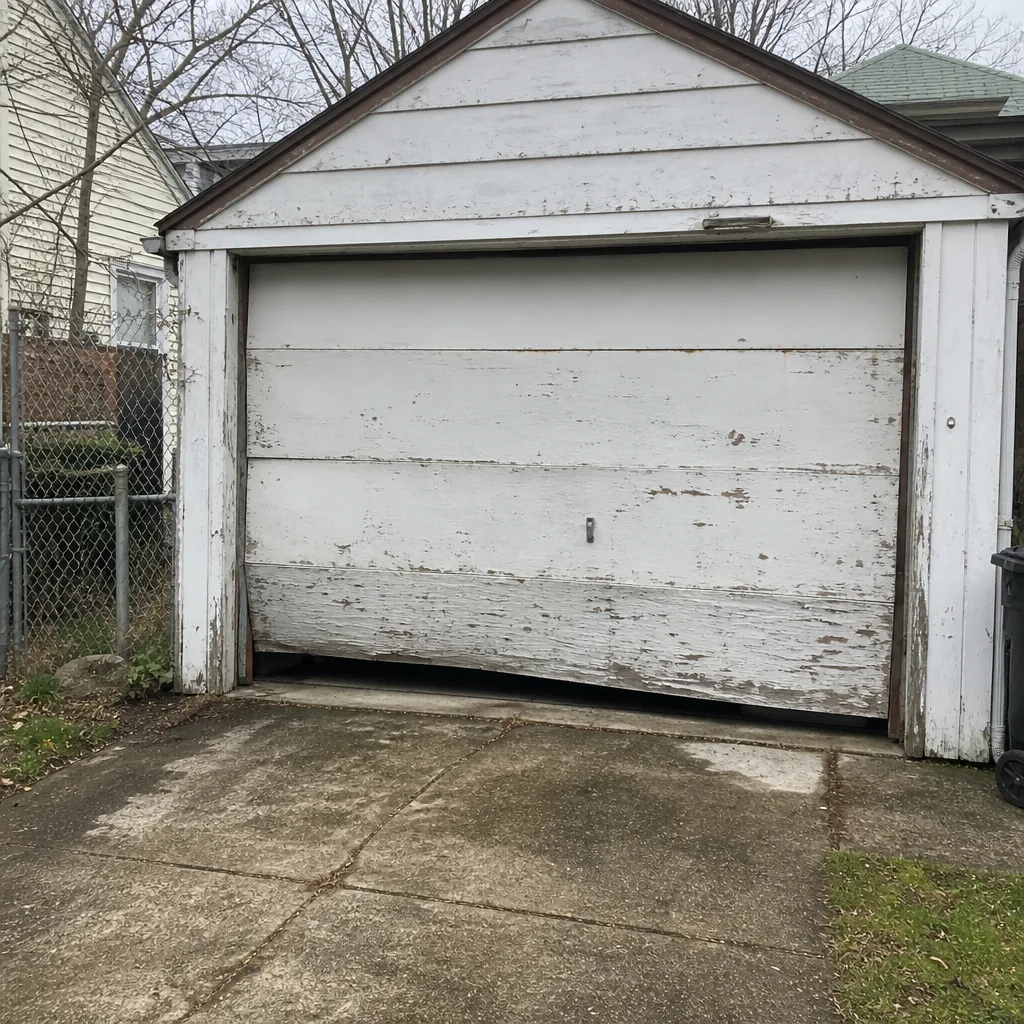 Before
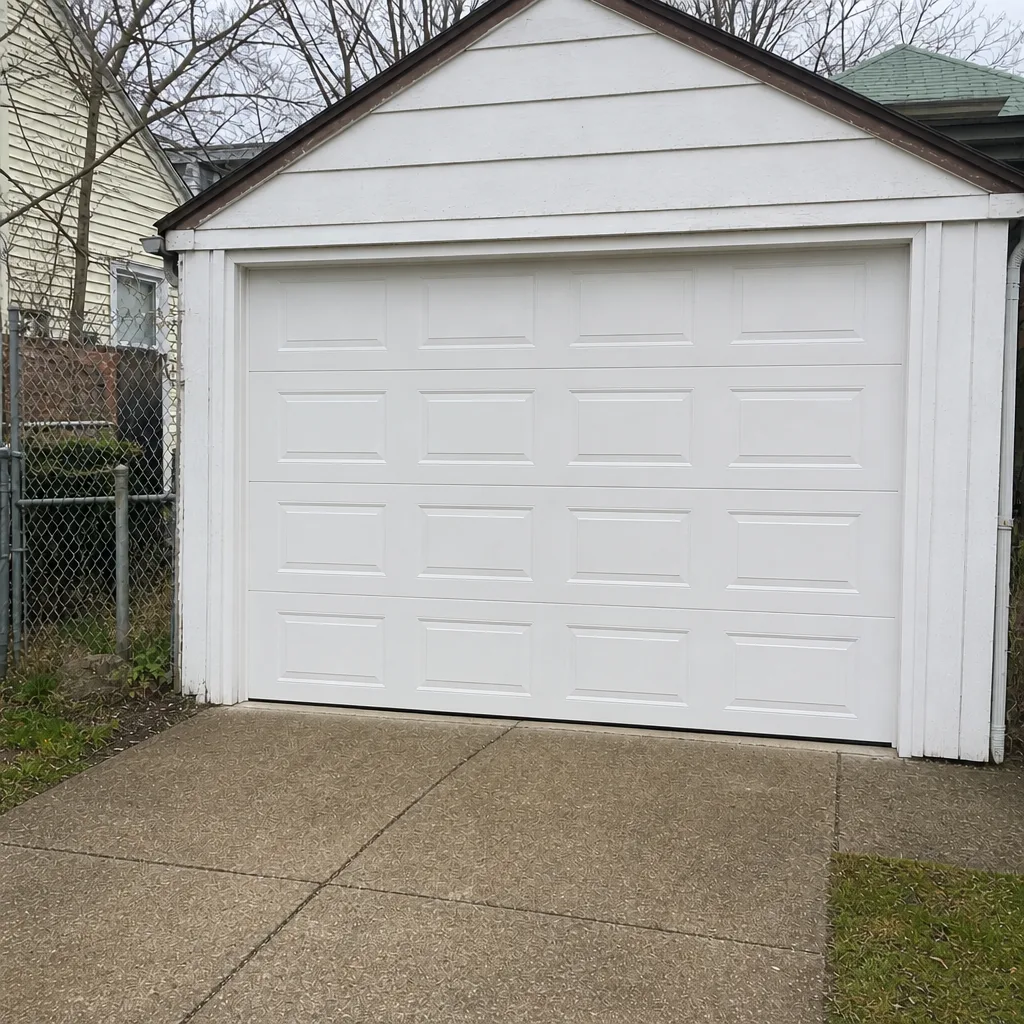 After
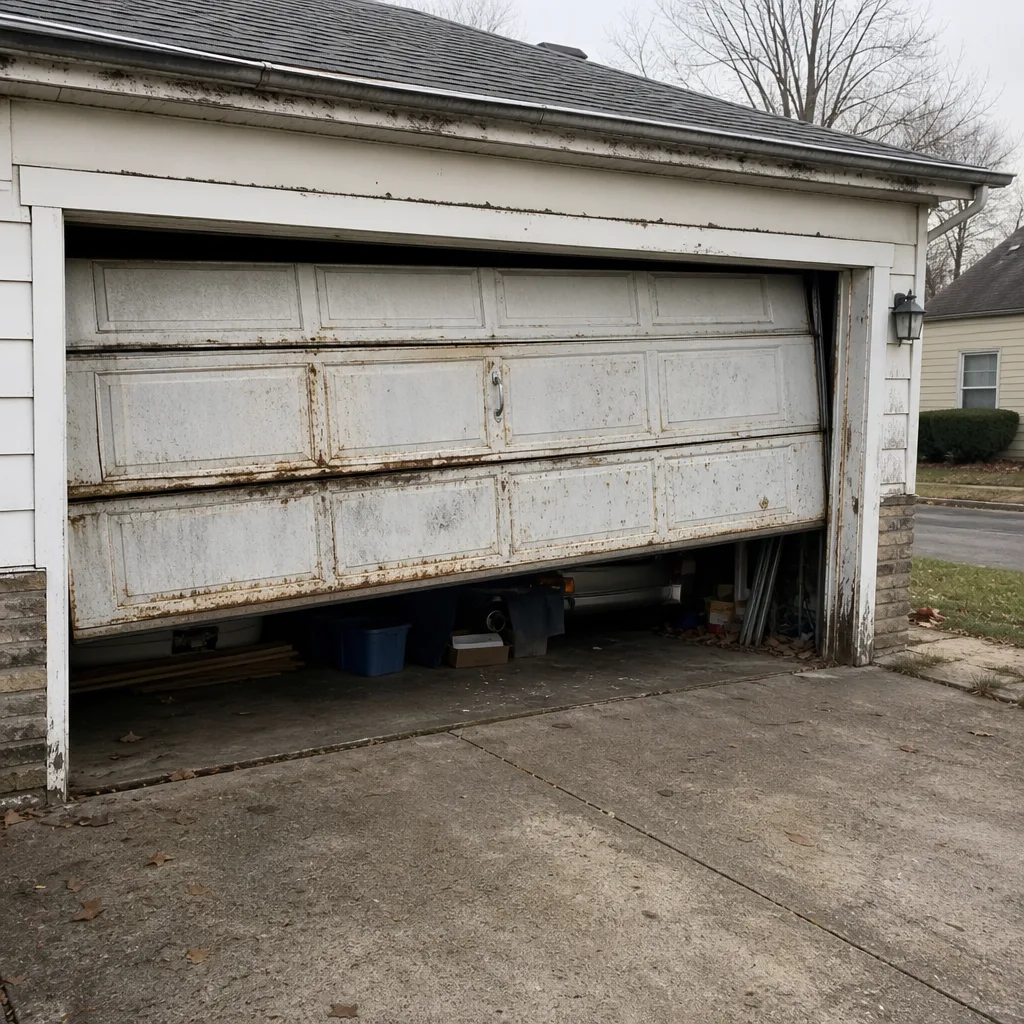 Before
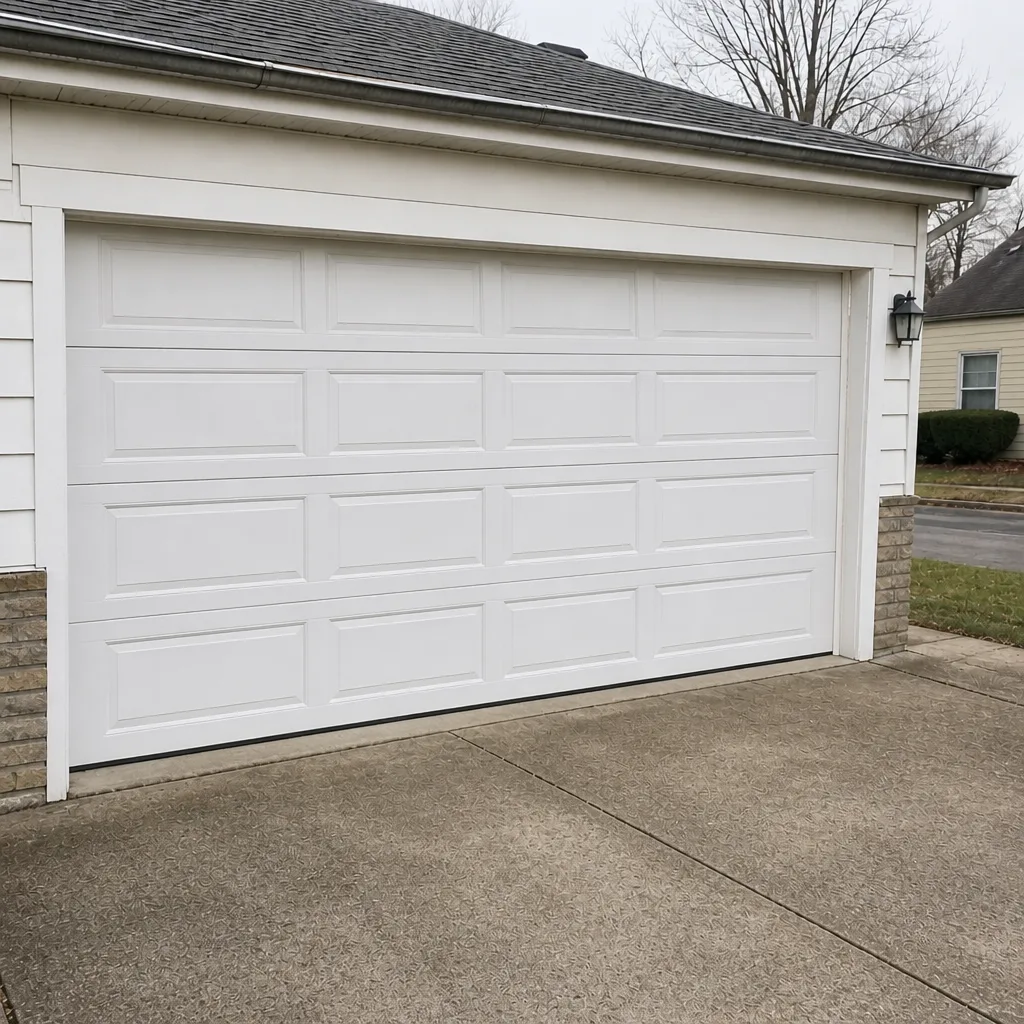 After
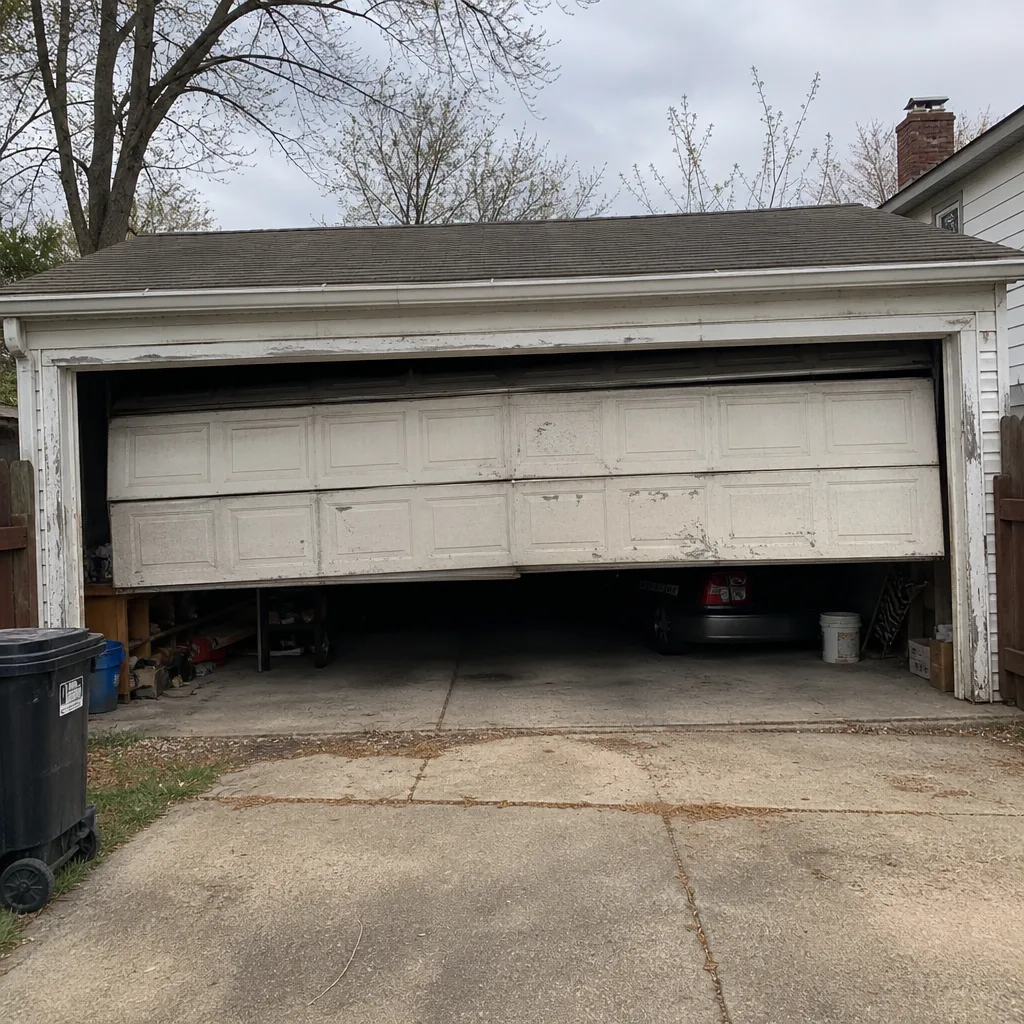 Before
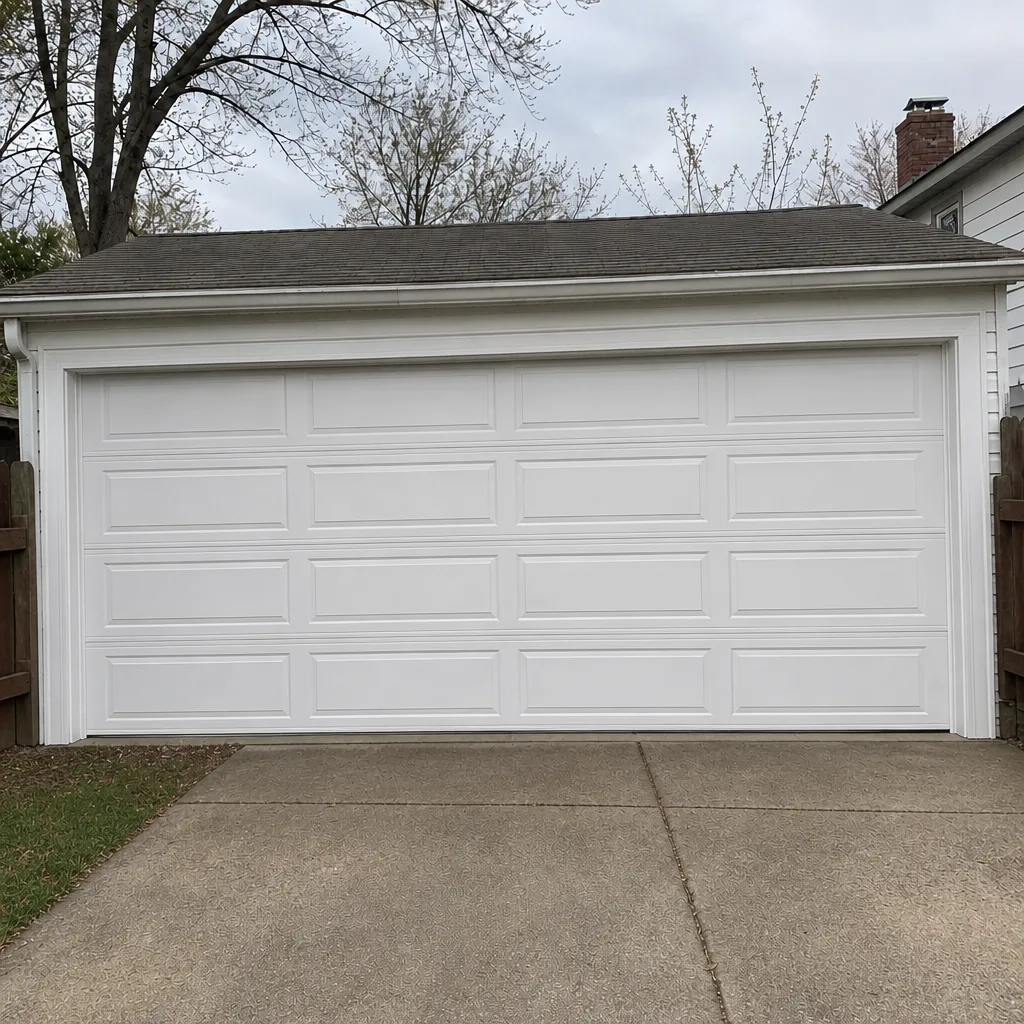 After
When to Call a Professional
Call a professional the moment you see a broken spring, a frayed cable, a door off its track, or a door that won’t stay open. Those are stop-using-it-today situations. Call for a scheduled visit when the sounds or movement patterns have changed in the last few weeks, when the opener is behaving inconsistently, or when the door needs balancing after a few years of smooth service. Don’t wait for a warning sign to become a failure – the diagnostics cost less than the emergency.
For anything involving a high-tension spring or cable, don’t attempt a fix yourself. This isn’t a caution – it’s the single most dangerous thing on a residential garage door. Garage Door Repair Old Brooklyn offers free estimates in Old Brooklyn – call (888) 965-4156.
Frequently Asked Questions
Grinding or squealing during the cycle is the most common warning sign, and it usually points to worn rollers or dry hinges rather than anything structural. It’s also the cheapest to fix, so it’s worth addressing early. Call (888) 965-4156 for a free estimate.
Usually not an emergency, but it should be diagnosed soon. A door that reverses mid-close most often means the safety sensor is misaligned, obstructed, or failing, or the opener is sensing excessive resistance from a binding track. Both are fixable, and neither requires emergency service unless the door is stuck open or won’t close at all. Call (888) 965-4156 if you want it looked at.
No. Torsion and extension springs are under extreme tension and can cause serious injury if they release uncontrolled. Spring replacement is a job for a trained technician with the right tools. Don’t attempt it, and don’t operate the door until it’s repaired. Call (888) 965-4156 to schedule spring repair.
Most warning signs point to repair, not replacement. A grinding roller, squealing hinge, worn cable, bent track, and even a broken spring are all repair items. Replacement is usually only the answer when the door’s structural panels are compromised, the frame is failing, or the repairs stack up past the cost of a new door. A technician should be able to explain which category you’re in before quoting. Call (888) 965-4156 for a straight answer.
On most Genie units, a flashing diagnostic light on the back of the motor housing corresponds to a specific fault code. It’s usually either a safety sensor issue or a travel-limit problem. The pattern of the flashes tells you which. Our technicians work on Genie systems regularly and can read the code on arrival. Call (888) 965-4156.
Cold stiffens the spring lubricant and the opener’s drive components, and metal contracts slightly in low temperatures. Older doors especially will run louder in cold weather. If the noise appears suddenly and is much louder than previous winters, that’s worth an inspection rather than “just winter noise.” A sudden change is the signal. Call (888) 965-4156 for a free estimate.
The Bottom Line
Garage door warning signs are diagnostic clues, not random noise. Sounds point to specific components (grinding to rollers and track, popping to springs, squealing to hinges, banging to limits and loose hardware). Movement patterns tell you about balance and track alignment. Opener behavior – remote vs. wall button vs. light-only response – narrows the electrical side. And the quiet visual signs (frayed cables, rust on springs, bent track) are the ones that turn a scheduled repair into an emergency. Learn to read the four categories, describe what you’re seeing and hearing clearly, and you won’t be talked into replacing a part that isn’t broken. When a warning sign shows up, the cost of dealing with it early is almost always lower than waiting. We’re here to help you sort it out in Old Brooklyn – call (888) 965-4156 for a free estimate.
Written by the team at Garage Door Repair Old Brooklyn.